
Sustainability
One year on: why our Science Based Targets initiative approval still matters
June 29, 2026
A year ago, JR&Co reached an important milestone.
Our near-term science-based emissions reduction targets were officially approved by the Science Based Targets initiative (SBTi), giving independent validation to our plans for reducing emissions and reaching net zero.
Twelve months later, that approval remains just as important.
Not because it was a badge of achievement, but because it continues to hold us accountable and provides a clear framework for turning ambition into action.
What is the Science Based Targets initiative?
The Science Based Targets initiative (SBTi) is a globally recognised organisation that helps businesses set greenhouse gas reduction targets aligned with the latest climate science.
Rather than allowing organisations to choose arbitrary or easily achievable goals, the SBTi assesses whether emissions reduction targets are consistent with what scientists say is needed to limit global warming and support the objectives of the Paris Agreement.
In simple terms, it helps businesses answer an important question:
Are we reducing emissions quickly enough to make a meaningful difference?
Why does the SBTi exist?
For many years, organisations made voluntary commitments to reduce emissions. While these commitments were often well intentioned, there was no consistent way to measure whether they were ambitious enough or aligned with climate science.
The SBTi was established to address that challenge by:
- Providing a science-based framework for setting credible climate targets
- Aligning corporate emissions reductions with the goals of the Paris Agreement
- Offering independent validation and accountability
- Accelerating meaningful action towards global decarbonisation
That independent validation is important.
It ensures climate commitments are not simply statements of intent but measurable targets supported by recognised scientific standards.
Why this matters to JR&Co
At JR&Co, we believe in giving our people, our clients and our planet our undivided attention.
Sustainability is an important part of that responsibility.
As a business operating across hundreds of client environments, we recognise that our activities have an environmental impact. We also recognise our opportunity to play a positive role in reducing emissions and supporting a more sustainable future.
Aligning with the SBTi helps us do that in a credible and transparent way.
Demonstrating climate leadership
Our clients, partners and suppliers increasingly expect organisations to back up sustainability commitments with measurable action.
SBTi approval demonstrates that our targets are grounded in science and independently validated, providing confidence that we are taking meaningful steps towards emissions reduction.
Supporting our clients’ sustainability goals
Many of the organisations we work with have ambitious sustainability objectives of their own.
By aligning our business with recognised climate standards, we can be an even stronger partner to clients who are looking to work with suppliers that share their commitment to responsible business practices.
Driving continuous improvement
Reducing emissions often goes hand in hand with improving efficiency.
Whether that means reducing waste, improving energy performance, optimising logistics or making smarter operational decisions, climate action can deliver practical benefits alongside environmental ones.
Future-proofing our business
Expectations around climate reporting, transparency and environmental responsibility continue to grow.
By aligning with science-based targets today, we are helping ensure JR&Co remains resilient, responsible and prepared for the future.
Support our wider sustainability strategy
SBTi is a core element of JR&Co’s commitment to environmental responsibility. It reinforces our work in sustainable operations and our mission to lead meaningful change in our sector.
Our commitment
As part of our approved science-based targets, JR&Co has committed to:
- Reduce absolute Scope 1 and Scope 2 greenhouse gas emissions by 42% by 2030 from a 2023 base year
- Measure and reduce Scope 3 emissions
- Reduce Scope 1, 2 and 3 emissions by 90% by 2040 from a 2023 base year reaching net zero target
These targets were independently assessed and approved by the Science Based Targets initiative.
One year on
Looking back, the approval itself was only the beginning.
What matters is the discipline, transparency and accountability that come with it.
The SBTi provides a clear roadmap for our emissions reduction journey and reinforces our commitment to making decisions that support long-term environmental progress.
One year later, we remain focused on the same principle that guided us from the start: turning commitments into action.
That’s important in an industry where clients increasingly expect transparency, measurable progress and responsible business practices.
It’s also consistent with how we’ve always approached our work: focusing on long-term value, continuous improvement and doing things properly.

Author:
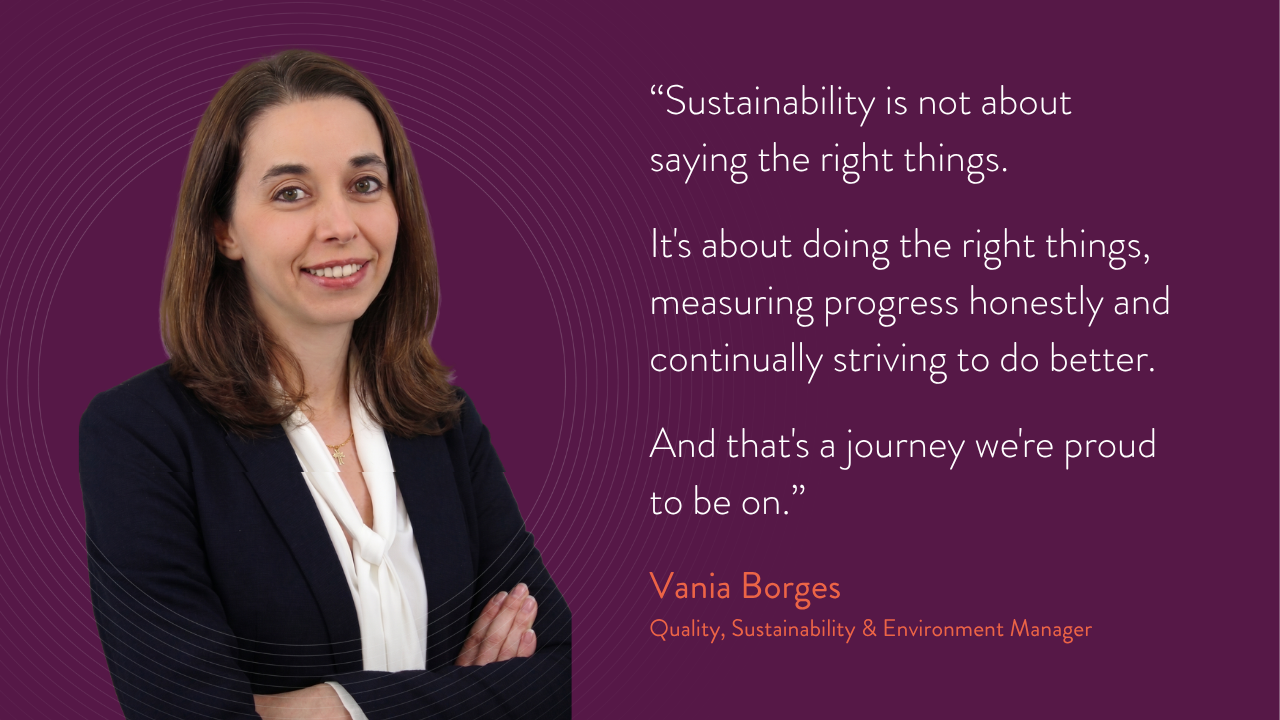
Vania Borges
Read time:
5 MINS